'/%3e%3c/svg%3e)

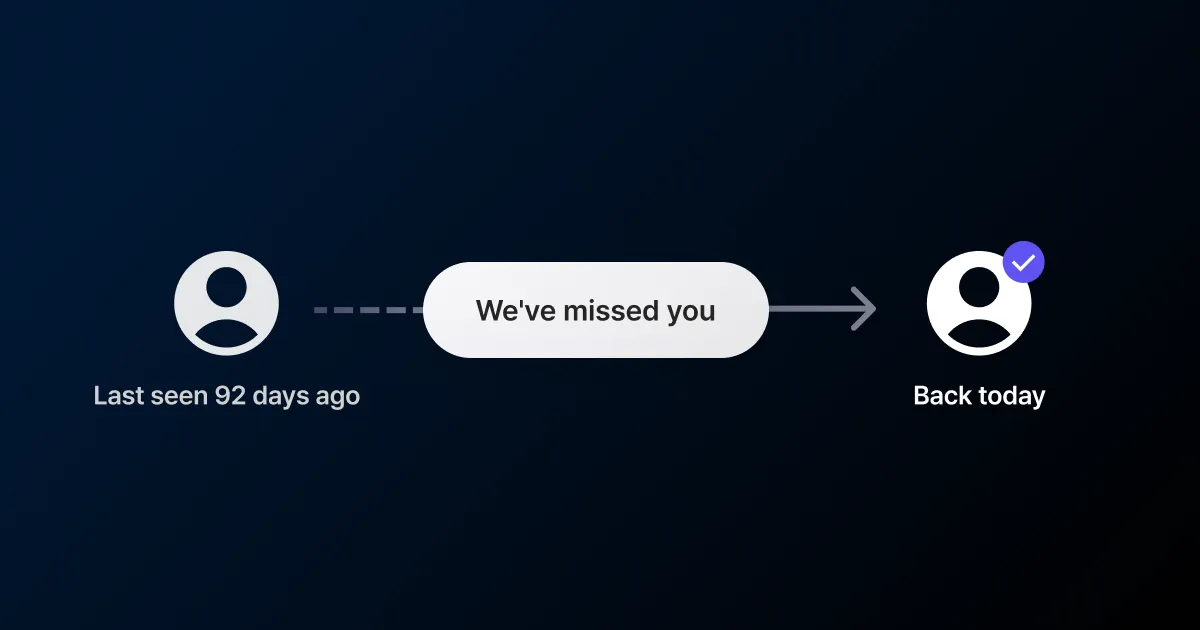
Marketing budget mostly chases new customers. The one drifting away is the customer you do not see. Visits thin out, messages go unopened, and one day they are gone.
Reactivation beats acquisition on cost
Acquiring one new customer runs five to twenty-five times what it costs to keep an existing one. And per Bain & Company analysis in Harvard Business Review, lifting retention by 5% raises profit 25% to 95%.
The odds favor the dormant customer too. Marketing Metrics puts the chance of selling to a brand-new prospect at 5% to 20%. For someone who once used your service, it is 20% to 40%, more than double. They already know you and have paid you once, so there is more to work with. Miss the drifting customer and you backfill the gap with the pricier work of acquisition.
Define what “inactive” means
Win-back starts with reading the signal. A fully gone customer is hard to recover, so watch the stage before. Set the bar to your cadence. Validity, analyzing Return Path data, classified any address unopened for 30 days or more as inactive, and over 25% of the databases studied qualified. A service that emails often might call 60 to 90 days of silence inactive. One that sends monthly sets it longer. For commerce with a purchase cycle, the bar is passing the average reorder interval.
Capture that bar as a segment and you step in before the customer fully leaves, pulling in anyone whose last visit ran long or whose next order is overdue.
Design within two or three sends
Win-back is not one message. But more is not better. In that same Validity analysis, only 12% actually opened the win-back. Yet 45% of the people who skipped it responded to a later message. One open rate will not tell you whether it worked. Sequence two or three sends; past that, complaints climb.
Order matters. Open with a low-stakes nudge about what changed or what they missed. Wait a few days. No response, move to another message or channel. Save the big discount for last, so you do not spend margin on customers a nudge alone would have brought back. In the same benchmark, win-back automations earned about $0.84 per recipient for stores with a $100 to $200 average order. Each message earns little, so hold the discount.
Re-engagement takes time. In that report, the average gap between getting a win-back and reading a later message was 57 days, and 75% came back within 89. Space the sends days apart rather than firing them off in hours.
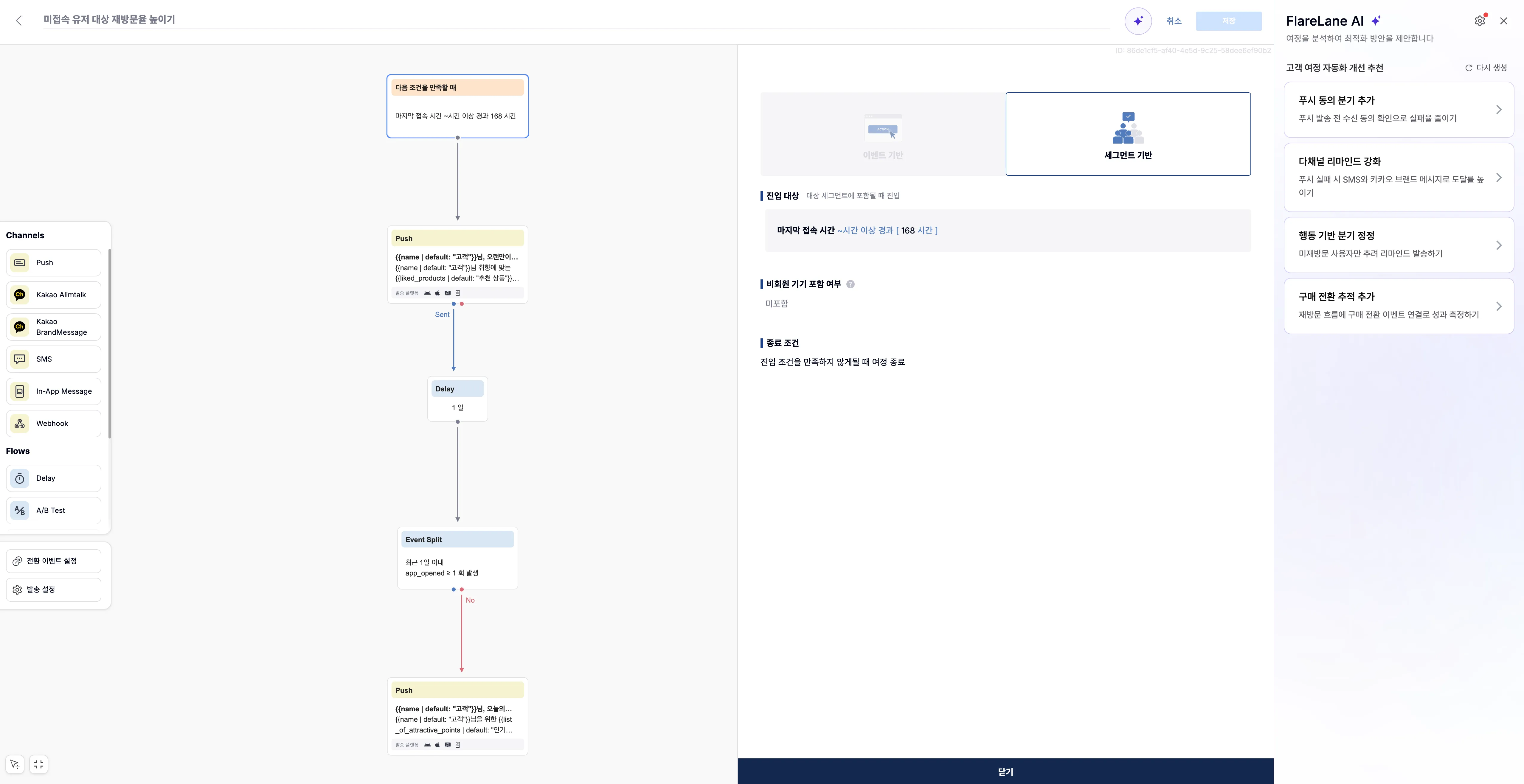
In FlareLane you set entry to the inactive segment, then tie a nudge push, a wait, and a behavior split like app_opened into one journey. Branch so only non-responders move to the next channel, and the whole thing fits inside two or three sends.
A sunset policy that stops the sends
The part teams skip is the stop. Chase unresponsive customers and open rates drop as volume grows. Your sender reputation slips, and even mail to active customers lands in spam. Addresses go stale fast: more than 20% turn inactive or invalid each year through job changes, address changes, and opt-outs, and a bounce rate over 2% can trip the spam filters at major inbox providers. Leave the list as it is and deliverability falls with it.
So pair win-back with a sunset2 policy: no response after the final attempt, drop them from the audience. The send itself is low-risk. In that analysis only 4% who received a win-back opted out, and 85% of them had read it first. The real risk is holding on to people who never respond. The plan to send and the plan to stop finish the design together.
Track through to repeat purchase
Win-back success is whether they come back and buy, not whether they reopened. Walk it node by node, see where people drop and who reaches a purchase, and you know what to fix next time.
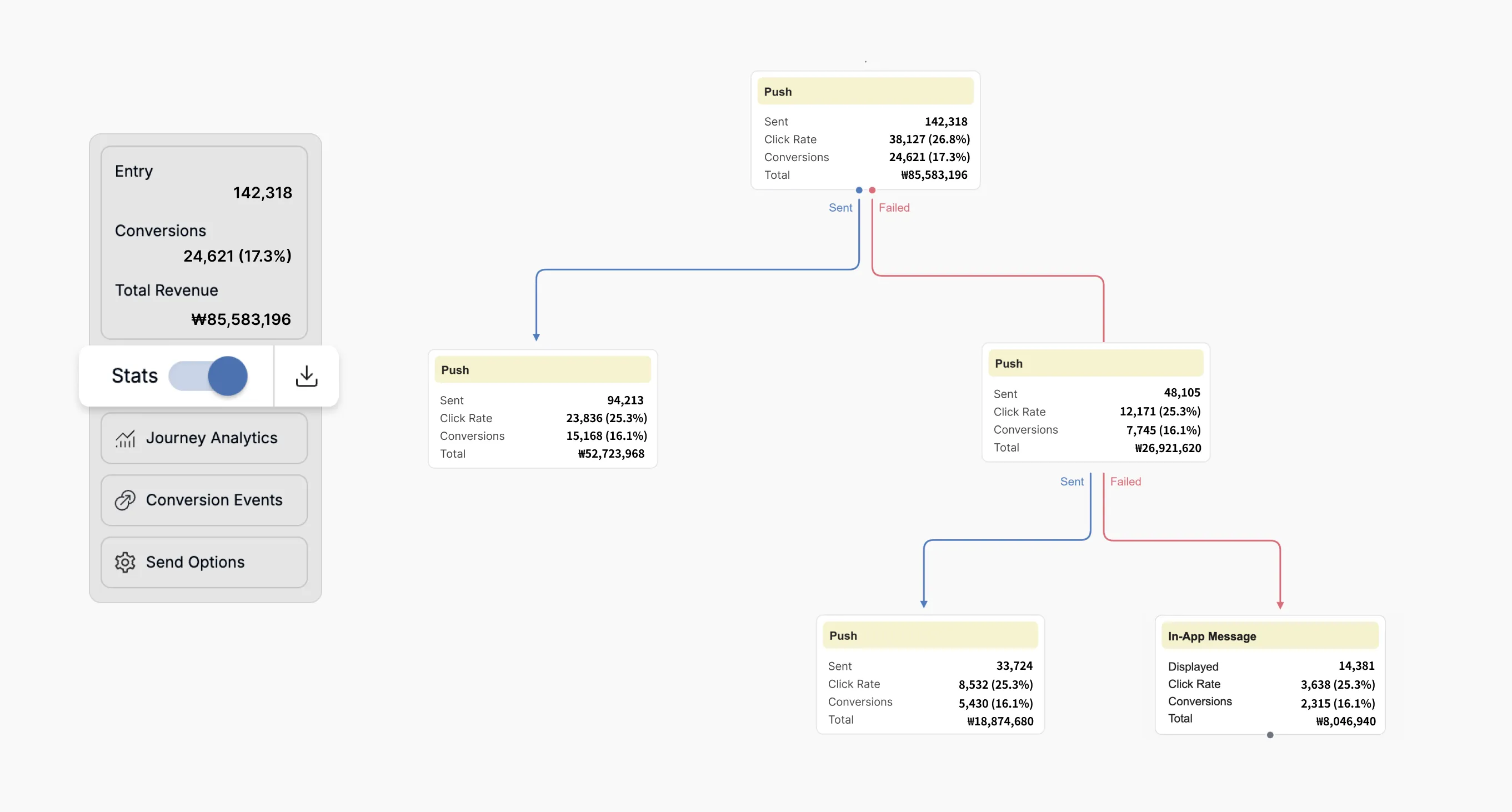
Bring someone back with a one-off discount, watch them drift again, and you are back where you started. Automated journeys convert better than manual sends: in ecommerce email benchmarks, one-off campaigns placed orders at 0.16% while automated flows hit 2.11%, more than ten times higher. In FlareLane you set the inactive state as the entry condition, tie the nudge, wait, and channel switch into one journey, and end it the moment the customer buys again. The AI Agent suggests the next branch or an added channel to get a draft going. Start by writing down how you define an inactive customer today, and which signal to act on first gets much clearer. You can request a consultation below.

'/%3e%3c/svg%3e)