'/%3e%3c/svg%3e)

Plenty of teams report performance on a last-click basis, handing all the credit to the channel tapped right before purchase. The math is simple. But customers do not see something once and buy. They get touched many times, think it over for days, and move across channels before they buy.
The limits of last-click
Look at the last click alone and the channels that show up right before purchase, like search ads or retargeting, get overrated. The earlier messages that first brought the customer in, grew their interest, and held them when they were about to leave look like they earned no credit.
Nielsen points out you have to look beyond the last touch, because counting only the final touchpoint wipes out the credit for the work that built awareness and brand. Measure this way and it is easy to pour budget into the wrong channel.
See touchpoints together
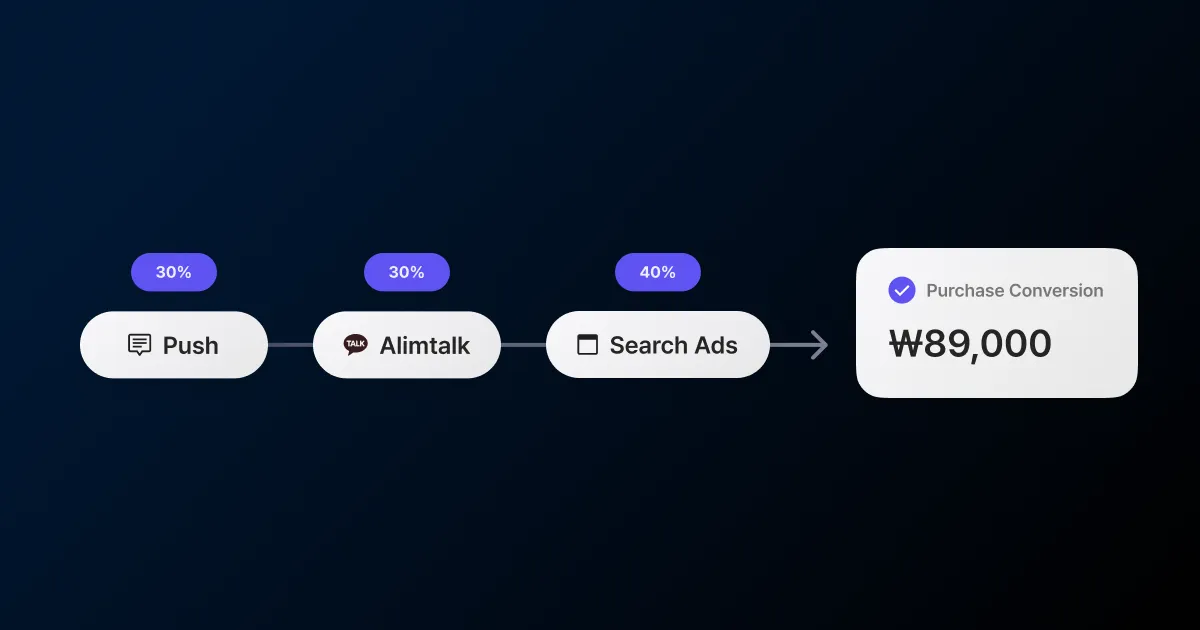
The alternative is to spread credit across touchpoints instead of piling it on one channel. This is how FlareLane’s conversion measurement works. When you create a conversion event, you set three values. First, what counts as a conversion, among a purchase, a sign-up, or a specific action. Next, the conversion measurement basis: either click-based or send-based, with the available basis differing by channel. Push lets you pick either. KakaoTalk and SMS are send-based only, and in-app is click-based only. Last, the attribution window, the number of days after the measurement point that you will still credit a conversion to the message.
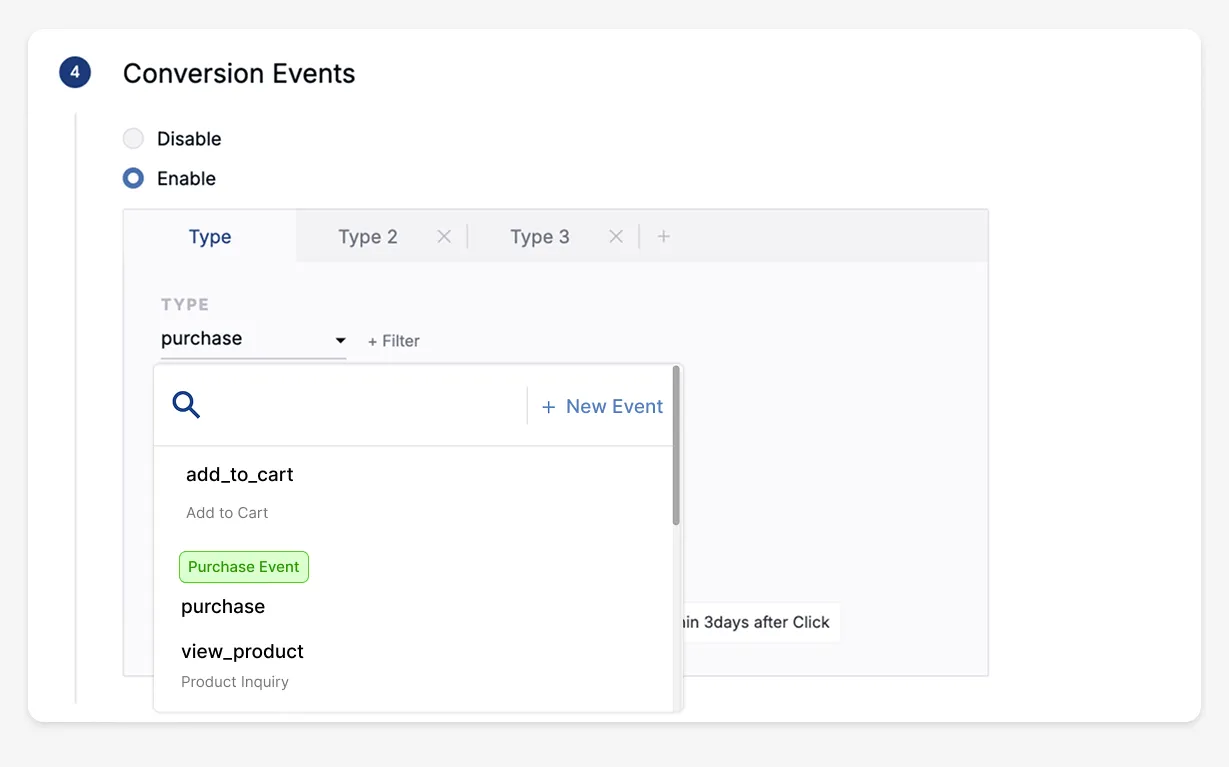
You can set up to five conversion events, and using them requires event integration first. Once it is set up, the way credit gets assigned parts ways with last-click. When a conversion happens, FlareLane does not hand all the credit to the one channel right before purchase. The moment the user fires the goal event, it finds every message sent to that user toward the same conversion within the attribution window and ties them all to it. Even when push, KakaoTalk, SMS, email, and in-app are mixed, they bundle into one conversion, and credit accrues by campaign and automation.
Even if one user is on several devices, a conversion counts only once per user ID, so the same purchase is not double-counted across devices.
Measuring by revenue
Judge channel performance by send counts or open rates alone, and the channel that sent the most looks like it did the best work. Whether those sends led to revenue is a separate question.
For a purchase conversion, you also specify the amount key, the quantity key, and the currency. Then when a conversion happens, the purchase amount, amount times quantity, is recorded alongside it.
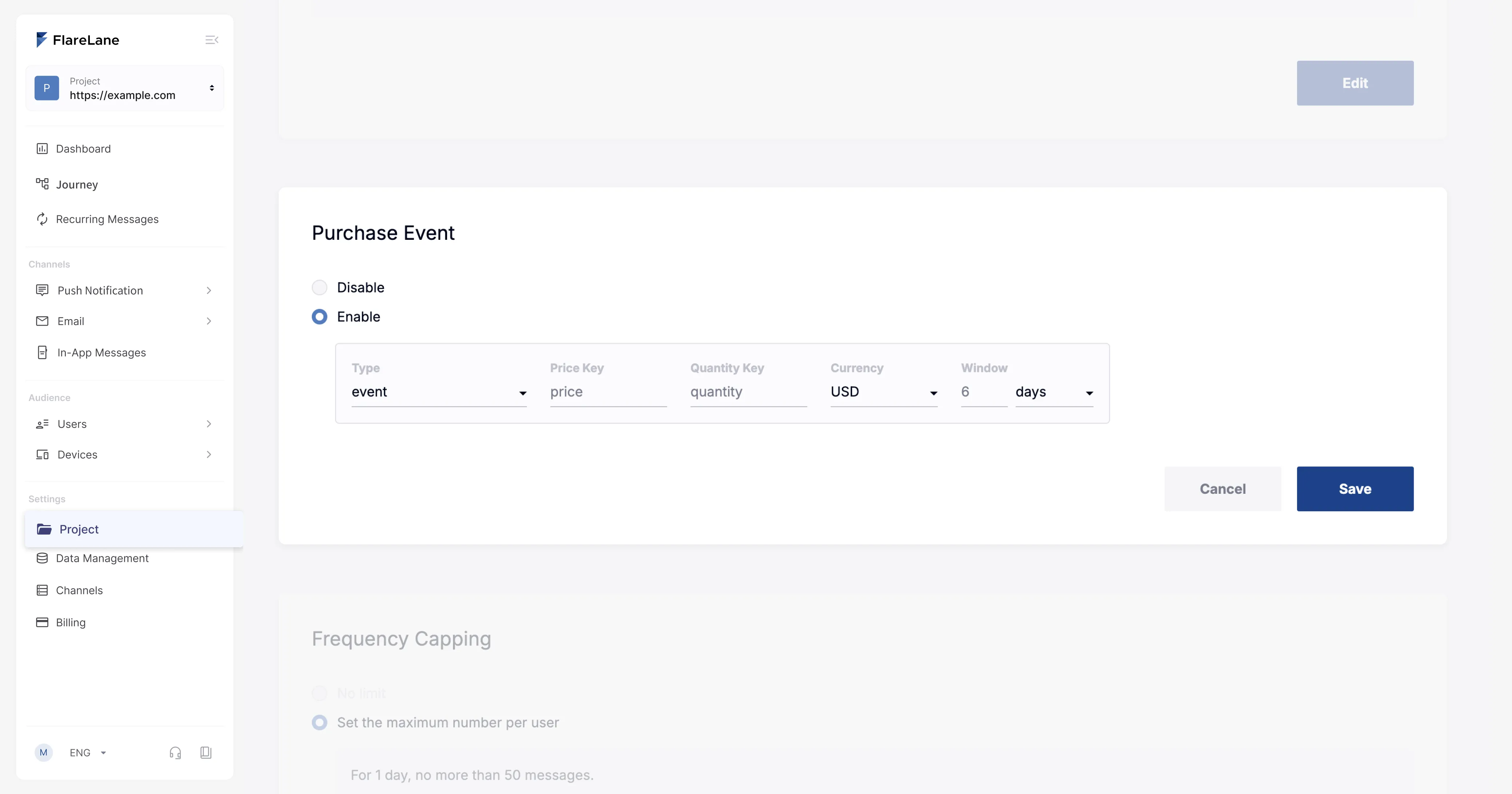
These values aggregate in real time as conversion counts and attributed purchase amounts, broken out by campaign and automation. Which channels and messages contributed to revenue, and by how much, becomes the basis for the next budget split.
One home-shopping company running push through FlareLane reads push by order revenue, not send counts. That order revenue grew 99.5% year over year. Read a channel by revenue contribution instead of send volume, and where to spend more shows up like this.
Split budget on last-click numbers alone and you tend to underspend on the channels that did the early work while overspending on the one that piled on at the end. If you want a way to follow send performance through to conversion and revenue contribution, you can request a consultation below.

'/%3e%3c/svg%3e)