'/%3e%3c/svg%3e)

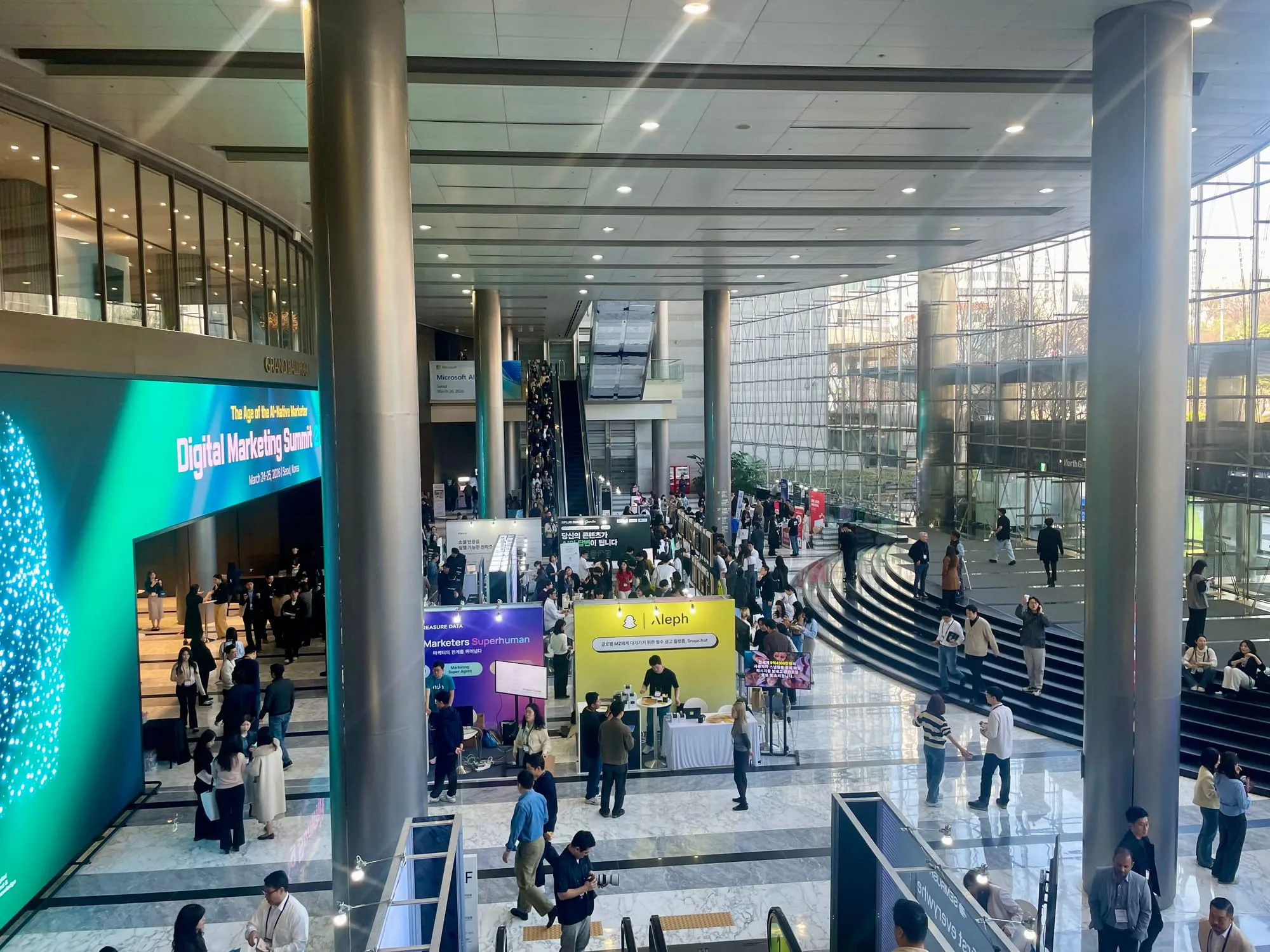
On March 24 and 25, DMS 2026 ran at the COEX Grand Ballroom in Seoul. This year’s theme was “The Age of the AI-Native Marketer.”
FlareLane ran a booth across both days. Most of the questions we fielded there were about real operations: where AI fits, how it connects to the data you already use, and whether you can hand it the actual sending.
What an AI-native marketer means
At this year’s event, AI came up less as a content tool and more as something you attach to the operations themselves.
The conversations at the booth ran the same way. People wanted to know how far AI could go in the operating steps: building segments, drafting messages, reading campaign results.
The questions leaned toward concrete adoption conditions, not abstract forecasts.
What marketers asked
The most common question at the booth was a simple one: “Can I plug this into our campaigns right now?”
It came down to stability and data. Marketers wanted to know whether the AI Agent was smart only inside a demo, or whether it held up in a live setup. They asked what data it needs to build a segment, send a message, and analyze the result. Show the flow on screen, and the next question was almost always the same: “So how does it connect to the data we already have?”
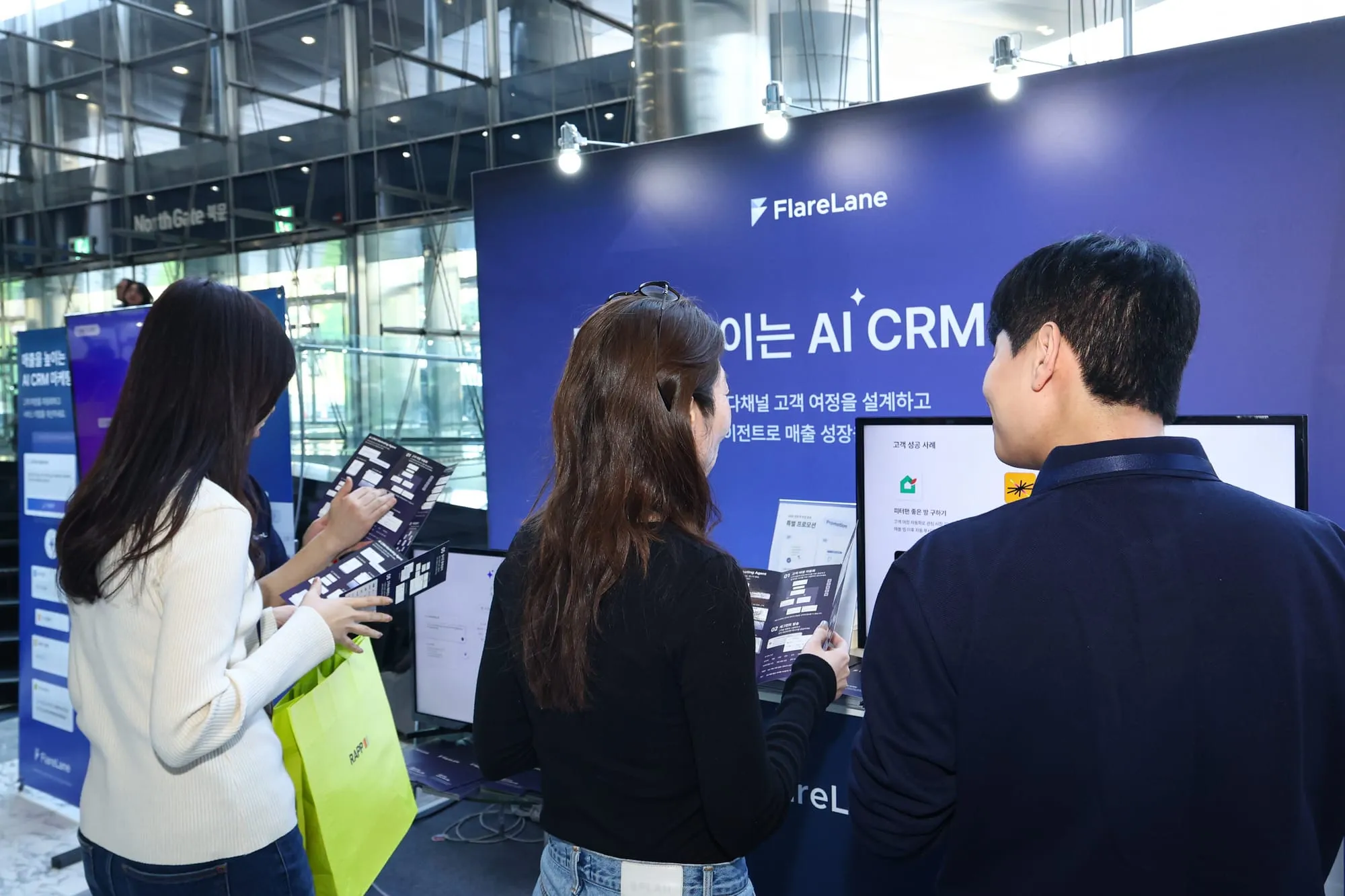
Running multichannel from one place came up just as often. When push, KakaoTalk, and email run separately, the same person easily gets the same message across channels, and the moment that mattered slips by. So marketers asked how to coordinate channels together and cut the operating load at the same time.
Some of the companies at the booth work across several channels and customer data at once. For them, the pressing question was how to connect segments, sending, and performance analysis.
Unveiling the AI agent
These questions also show which problems FlareLane needs to solve better. Sending messages well is not enough. What mattered was carrying it through from picking the audience to analyzing what happened after the send.
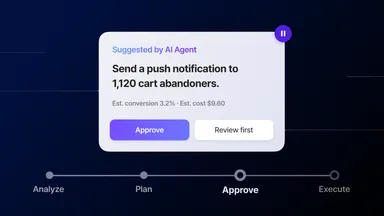
At DMS, FlareLane unveiled the AI CRM Marketing Agent for the first time and ran it live at the booth. A visitor could build a segment, then watch the agent design a campaign for it, send it, and read the results back, all on screen. Interested companies were also offered a PoC1. A demo only tells you so much, so the point was to validate it briefly against real data.
Sometimes the explanation doesn’t need to run long. The customer results laid out on one side of the booth did that job.
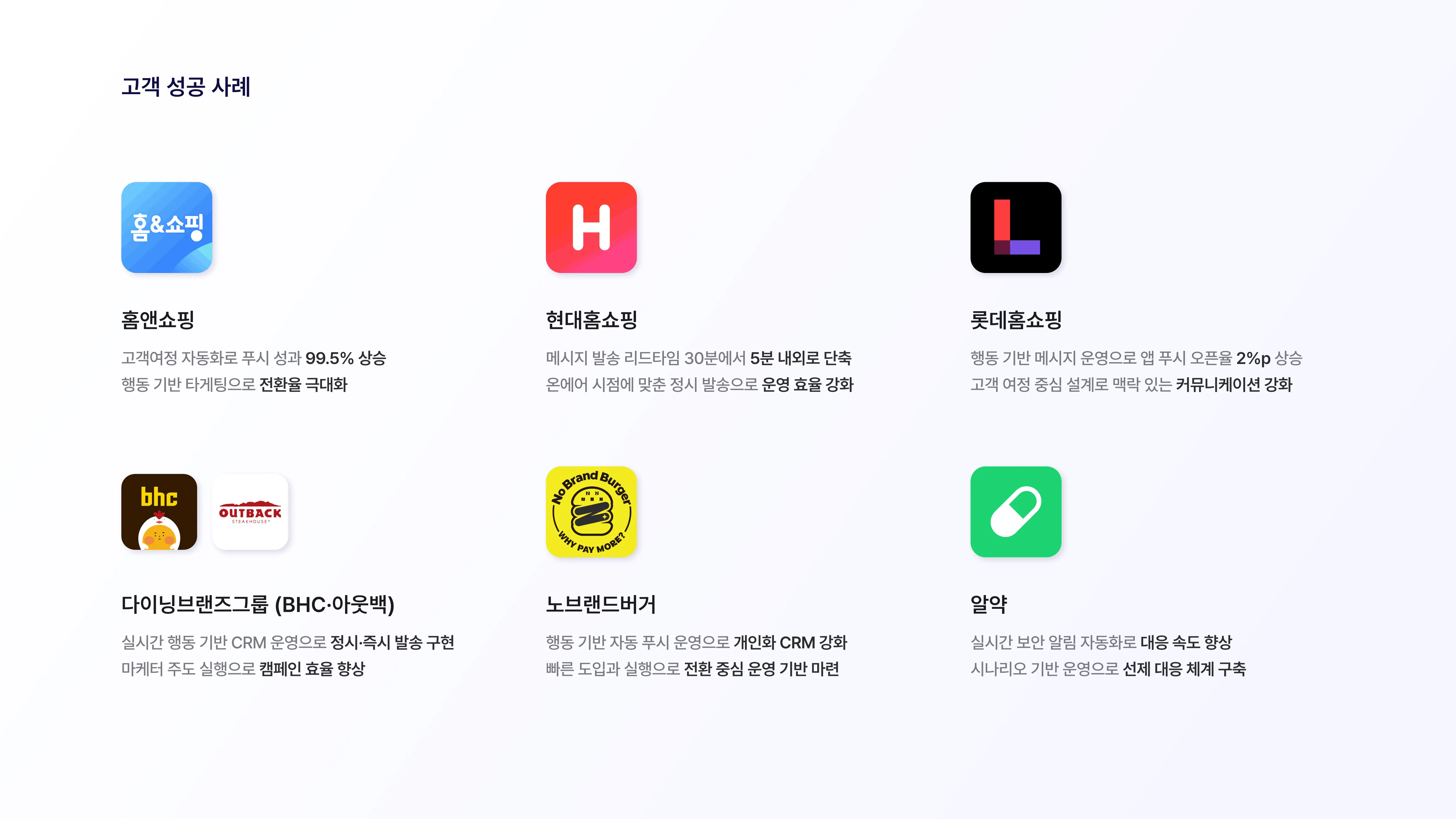
Home&Shopping’s customer-journey automation and Lotte Homeshopping’s behavior-based messaging were the standouts. Both showed how automation connects to real operating metrics.2
The next questions turn to results
Across both days, what the booth made clear is that teams evaluating AI CRM care more about the actual connection than the demo. The questions kept coming: which data to use, which sends need human approval, and what yardstick to judge results by.
The next step is not another demo but a read on results. It takes a short validation on real data to see how far you can wire it into live campaigns.
If you didn’t make it to the booth, you can still run that loop briefly yourself: build a segment, review the campaign draft, and read the results back. If there’s data you’re curious about, the fastest way is to try it on that first.

'/%3e%3c/svg%3e)