'/%3e%3c/svg%3e)

CRM marketing handles user personal data. Names and phone numbers, emails, purchase history, behavior inside the app, all of it. When you choose a solution, security comes first.
Every solution says it manages data securely. What counts is whether an outside body checked that claim against a fixed standard. In Korea, that standard is ISMS-P. FlareLane holds it.
What ISMS-P is, and why it carries weight in Korea
ISMS-P is run by the Korea Internet & Security Agency (KISA) under the Personal Information Protection Act and the Network Act. Two certifications sit underneath it. ISMS2 covers information security. ISMS-P adds personal information protection, the P, on top. CRM marketing runs on personal data, so the standard that fits it is the one with the P.
| Certification | What it audits | Personal data |
|---|---|---|
| ISMS | Management system, protection measures | Not covered |
| ISMS-P | Management system, protection measures, personal-data lifecycle | Covered |
In Korea this is not a nice-to-have. The country enforces some of the strictest privacy law anywhere, and a KISA certificate is the recognized proof that personal data is handled to a national standard. To a Korean partner or a security review, ISMS-P says in one line that an outside auditor checked your controls.
ISMS-P splits into three areas: how you build and run the management system, what protection measures guard your systems and data, and how you handle personal data from collection to disposal. The first two areas are the scope of ISMS; the third, the personal-data lifecycle, is what makes it ISMS-P. Together they come to 101 controls. FlareLane passed that audit, the first in Korea’s CRM marketing industry to clear it.3
Across Korean customer-messaging and CRM marketing solutions, plenty hold no security certification at all. Many that do stop at ISMS, which covers security only, or at CSAP, the cloud security certification for public procurement. Fewer still hold ISMS-P, which puts the full handling of personal data through outside review.
Here is how disclosed security certifications line up by solution.
| Solution | Disclosed security certification | ISMS-P |
|---|---|---|
| FlareLane | ISMS-P | Yes |
| Ch** | ISMS | No |
| Br*** | ISO 27001 (overseas) | No |
The table reflects each solution’s publicly disclosed certifications; ISMS-P status is verifiable in KISA’s certificate records (as of June 2026).
The controls below are the ones you meet most directly when you put user data into a CRM. They are also the parts a KISA auditor checked before granting FlareLane the certificate.
Data collection, storage, and disposal
Of the three areas, the lifecycle-stage privacy requirements check every step from collection to disposal: on what basis data was collected, whether it is used for its stated purpose while held, and whether it is deleted once it is no longer needed.
Load a user list into a CRM and these criteria apply. Outside review checks whether the data was collected with consent and whether data past its retention period gets cleared out.
This is the part closest to a marketer’s day. Consent and disposal get checked most often in routine work, and they are the first things examined when something goes wrong. FlareLane drops users who opt out from your send list automatically, so once someone withdraws consent, messages stop reaching them.
Permissions and access control
The protection-measures area covers the technical safeguards: who gets which permissions, how access is controlled, and how data is encrypted. You can’t earn ISMS-P certification without passing these controls.
FlareLane assigns each member a role. What a role can see and do is set per role, and permissions like viewing sensitive real-name data or downloading a CSV are granted separately. It follows least privilege4: open only what the work needs.
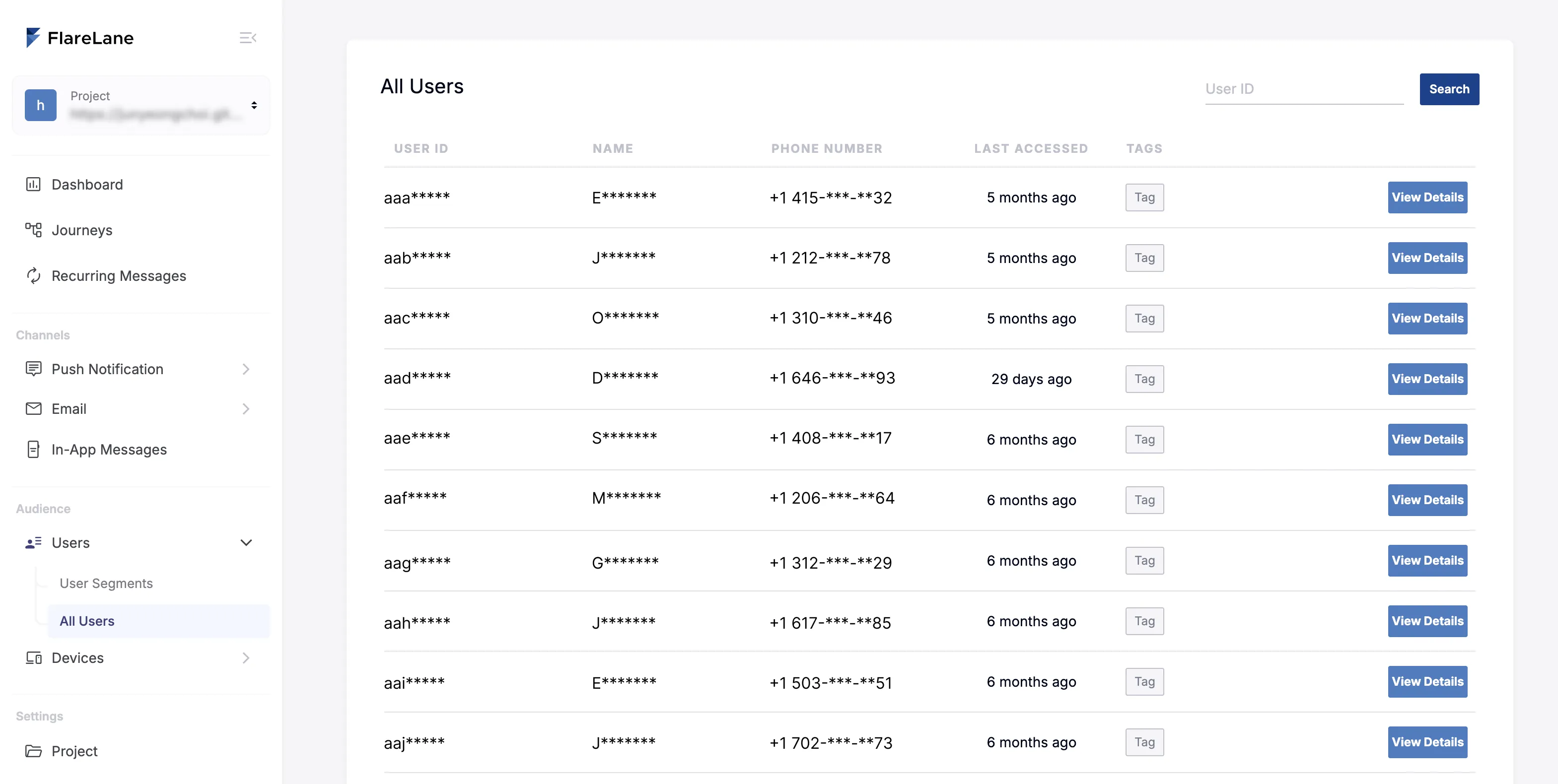
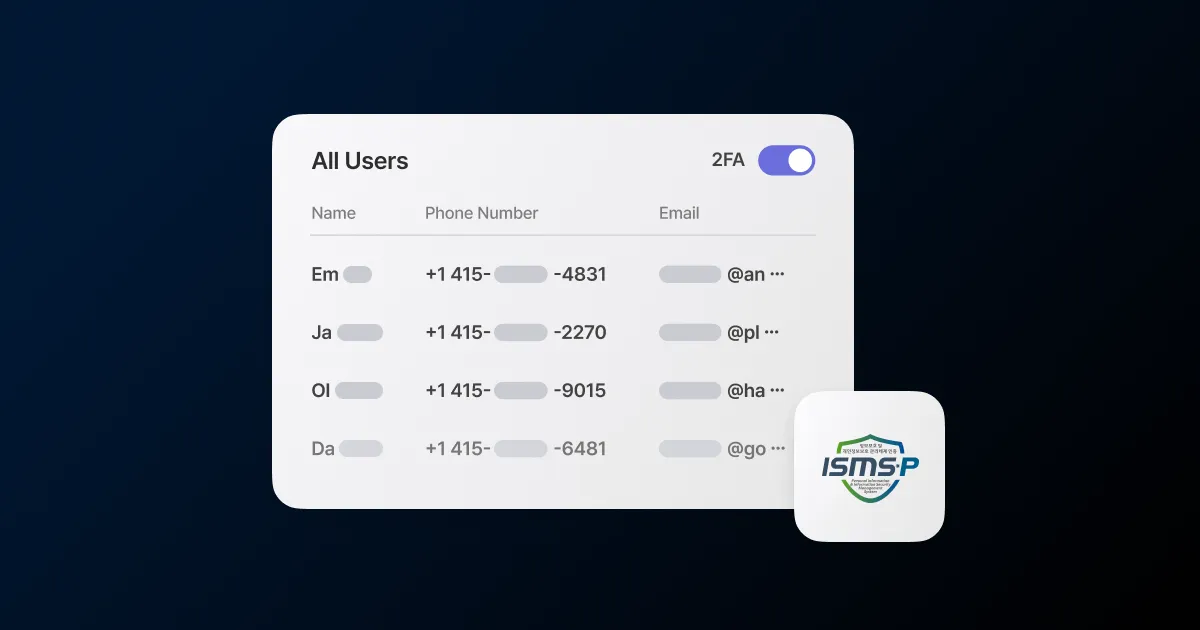
So when you view user information in the console, real-name fields like name, phone number, email, and birthdate are partially hidden. How much is hidden depends on the role, and only members with permission see the original values. It is the most practical way to cut down on personal data moving around internally for no reason.
IP access control
Access location can be restricted too. Register the IPs allowed into the console per project, and anything outside that list is blocked. It keeps the console reachable only from set places like an office or company network.
Two-factor authentication
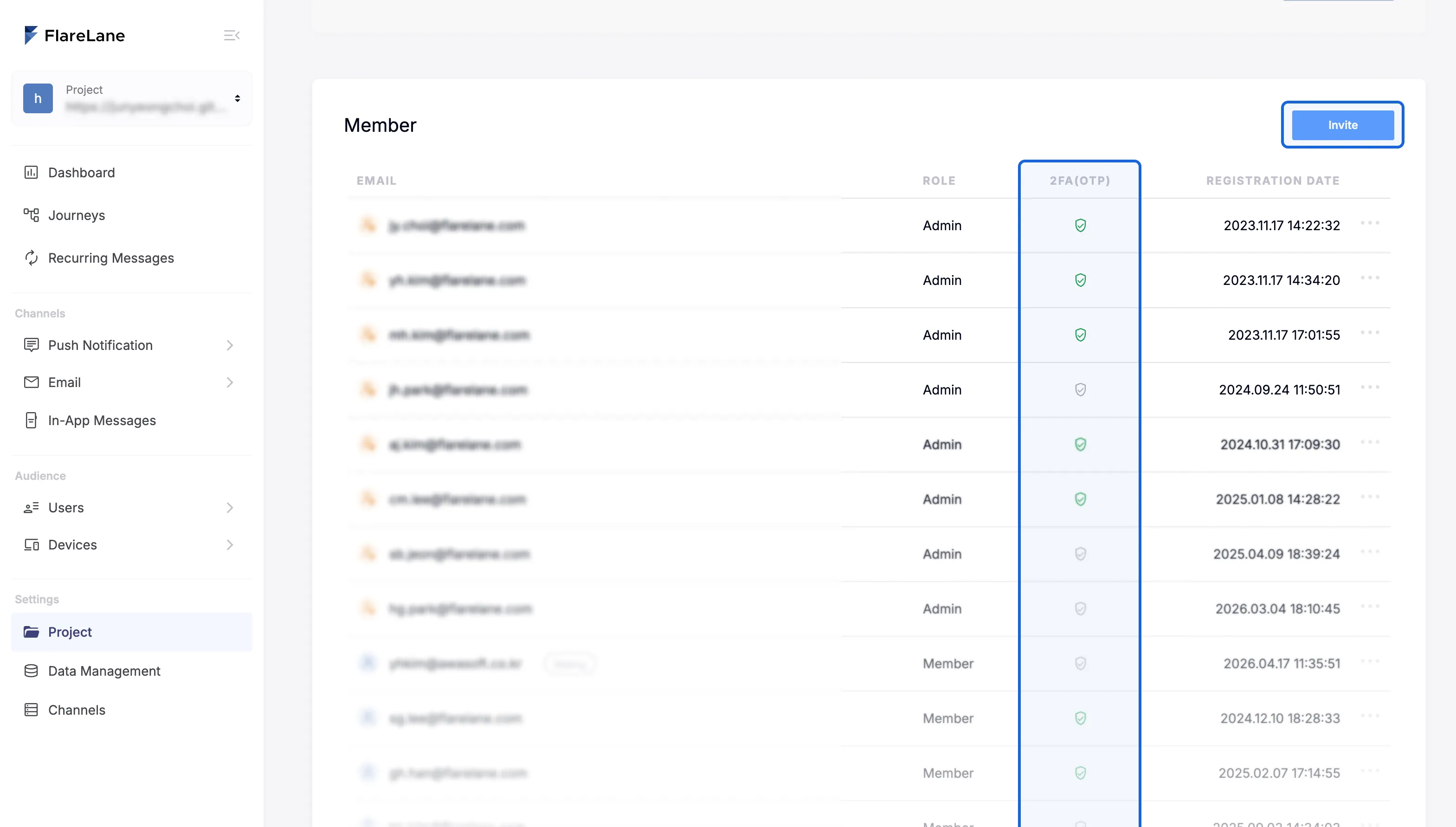
Login gets one more step. An ID and password alone aren’t enough, so console login asks for an OTP as well. If a password leaks, the account doesn’t open on it alone.
Activity logs and incident response
Some protection-measure controls assume incidents happen. ISMS-P doesn’t claim every incident can be prevented. It checks whether you can spot anomalies and how you respond when one occurs.
FlareLane logs the main actions taken in the console. Who viewed, edited, or deleted user data, downloaded a CSV, or sent a message, recorded with the member, time, and source. When something goes wrong, that record is where you start narrowing down the cause.
When requests spike abnormally, per-project limits step in to protect the system. A CRM pools a lot of user data in one place, so how fast you catch a problem and contain it decides how far the damage goes. ISMS-P reviews that response procedure against an outside standard too.
Penetration testing and vulnerability checks
ISMS-P’s protection measures include a separate control for vulnerability checks.5 It calls for checking the system for weaknesses on a regular schedule and fixing whatever turns up. Past a certain company size and data sensitivity, it also calls for penetration testing.
Penetration testing means attacking the system the way an outside attacker would. Testers go straight at the exposed parts, like login, payments, and APIs, to find weaknesses that could actually be exploited. Public-facing services get retested on a schedule.
FlareLane went through this penetration test during certification. After fixing what the test surfaced, it passed the audit.
When you pick a CRM solution
Users grow more sensitive to how their data is handled, and in Korea that sensitivity is backed by law. So when you decide whose solution that data lives in, the standard it meets is part of the decision.
When you compare solutions, go past whether a certificate exists. Check whether it is ISMS or ISMS-P, and watch how its controls behave in the console. See whether role separation, IP access control, two-factor auth, and activity logs live only in a description or actually run on screen.
Write down the data you handle today and your internal security requirements, and that check goes faster. You can request a security requirements review below.

'/%3e%3c/svg%3e)