'/%3e%3c/svg%3e)

AI already helps with marketing busywork like drafting copy and making images. Agentic1 AI goes a step further: it reads your data directly, decides who to message with what and when, and sends. Whether you can hand off a whole campaign has become a real agenda item in marketing meetings. To put it into operation, the first thing to settle is how far to hand off and where a human approves.
What a marketing agent does
Gartner predicts that by 2028, 60% of brands will use agentic AI for 1:1 interactions, and that building campaigns channel by channel is on its way out. McKinsey goes further: agentic AI could power about two-thirds of today’s marketing work and lift revenue 10-30% through hyperpersonalization.
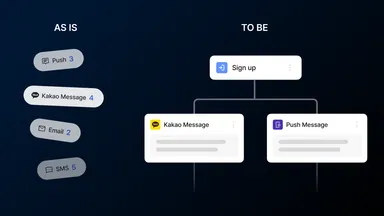
Reading behavioral signals, the agent switches channels as it sends: an email right after a product view, an SMS when a cart goes empty, an in-app message on a return visit. It used to take days to sketch the scenario, build segments, and write the copy. Now a one-line goal does it.
Why 40% get canceled
The real question is whether an agent that runs well in a demo does the same in production. Gartner expects over 40% of agentic AI projects to be canceled by the end of 2027, when costs run higher than planned, results never show up in the numbers, or risk controls don’t hold. McKinsey found the same gap: nearly 90% of CMOs are testing AI, but fewer than 10% have deployed end-to-end workflows that produce measurable results.
The way things go wrong looks similar. With no one watching, an agent runs a campaign on flawed logic or sends the wrong offer to the wrong segment. The tone of the copy drifts off-brand. The deeper problem is data: if past data carries bias, the agent repeats it. And when you can’t see why it decided what it did, people retrace every step, and the time automation saved disappears. The projects that get canceled usually went company-wide before checking the numbers on a narrow slice.
Prove it on one campaign first
Don’t roll it out company-wide. Start with one campaign where the result is easy to read. A win-back for users who haven’t logged in for about 30 days is simple enough to make a good first pick.
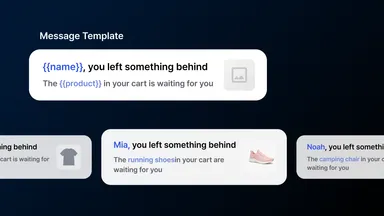
In FlareLane, you can hand that automation to the AI Agent. Describe the goal in plain language - say “win back users inactive for about a month” - and the agent reads your data and drafts the whole journey. Users whose last visit is past 720 hours (30 days) enter it. Those who haven’t opted out of SMS get a text; the rest get a Kakao BrandMessage, both opening with a line like “Haven’t seen you in a while - we’ve set aside a special offer for your next visit.” After a one-day wait, anyone who reopened the app in the meantime drops out, and only the rest get a single follow-up push. You can turn that draft on as is, or take the agent’s refinements first: an opt-in check before a Kakao BrandMessage to cut the failure rate, name-variable personalization, a revisit-conversion event for measurement. Each one shows what changes and why.
Run your human-operated version alongside it over the same window as a control. Once it’s live, FlareLane records which automation led to a conversion, so you can compare reactivation and repeat-purchase conversion on the same metric. If the numbers come through, you move to the next campaign; if they don’t, you stop before scaling company-wide.
You don’t need perfect data to start. Tidy segments, a brand voice doc, messages that performed well, and the last few days of behavioral data are enough to run the first campaign. Widen the data you work with once that campaign shows results.
What the marketer decides
Once the agent splits segments and sends messages itself, the marketer’s job moves up. Instead of building messages by hand, you supervise the system and set its direction: why this user, why this message now, what experience to design, what promise the brand keeps. Those strategic calls stay with people. The repeatable analysis and execution go to the agent.
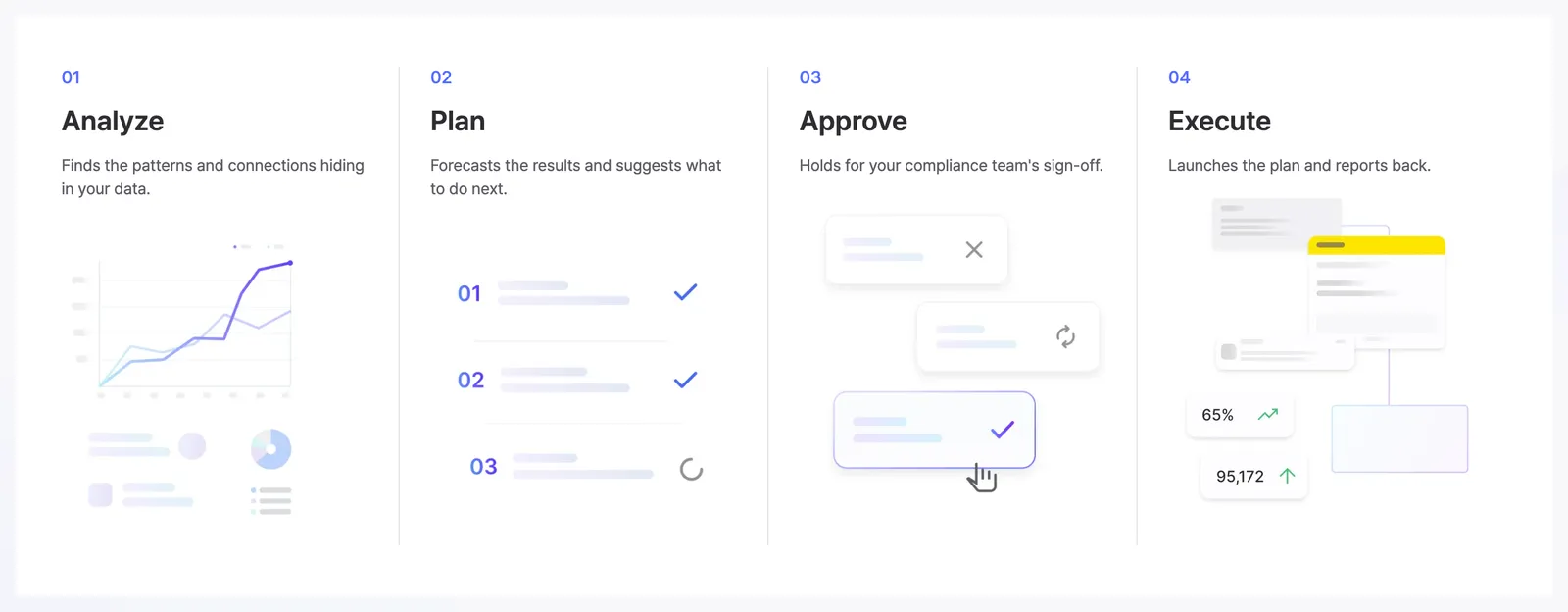
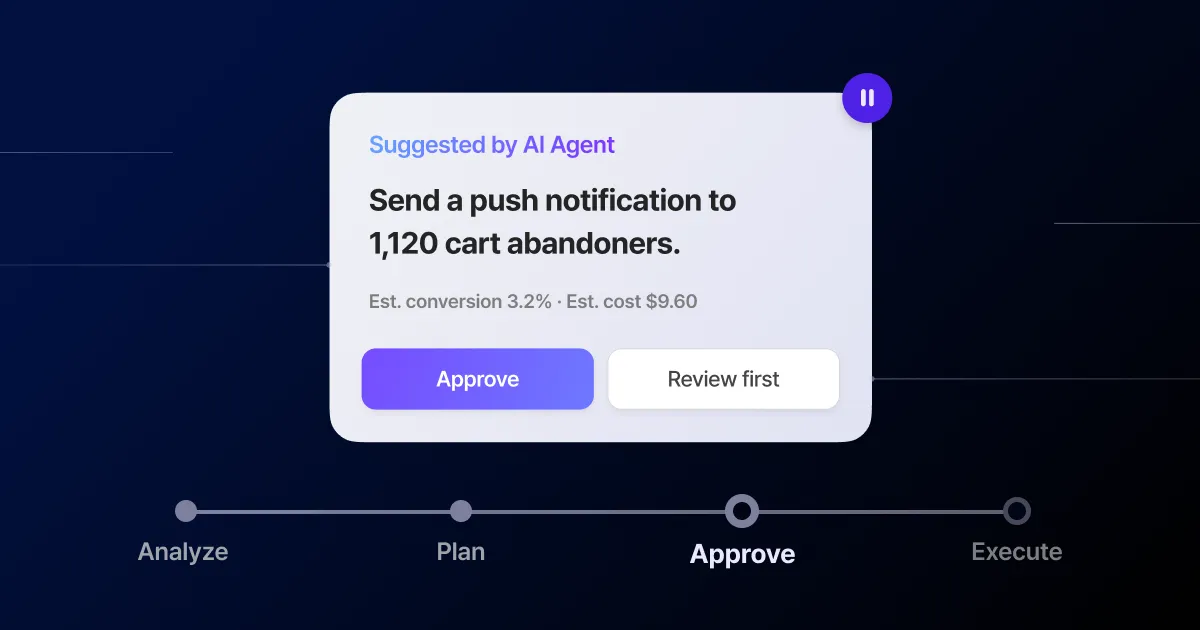
FlareLane’s AI CRM Marketing Agent analyzes your data, plans which automation to run, executes once a human approves, then reads the conversion results back. A demo only tells you so much about whether the same holds on your own data, so we run a short PoC on real data with teams that are interested.
Look at the campaigns you run today and pick one where the same work repeats and the result is clear. A dormant win-back or a cart-abandonment reminder, with obvious start and stop conditions, fits a first pilot well. Split what the agent handles from what a human approves there, and the scope of adoption gets easy to set. If you want help drawing that line, you can book a consultation below.

'/%3e%3c/svg%3e)